Did you know that PHP’s userland lets you change a readonly property multiple times? Or that you can modify an enum’s value? Or even change internal object properties that should never be changed? Let me show you some truly cursed PHP tricks.
Did you know that PHP’s userland lets you change a readonly property multiple times? Or that you can modify an enum’s value? Or even change internal object properties that should never be changed? Let me show you some truly cursed PHP tricks.

The smaller features in PHP 8.5 that may not make headlines but definitely deserve a mention.

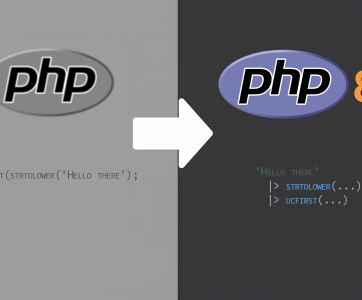
One of the most exciting additions in PHP 8.5 is the pipe operator. It enables more readable and expressive code when working with nested function calls.

Use PHP’s FFI to supercharge your application by offloading compute-heavy work to Go!

PHP 8.5 adds a new function for calculating the Levenshtein distance between strings — now with proper UTF-8 support.

PHP 8.5 introduces support for attributes on non-class constants. This article walks you through everything you need to know about this new feature!

Today, we'll explore one of the exciting features coming with PHP 8.5—the new #[NoDiscard] attribute to indicate important return values.

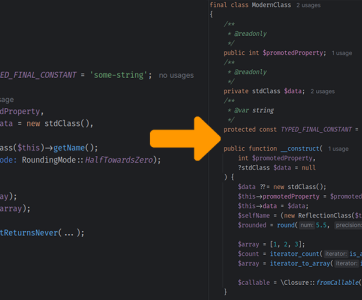
Transpiling lets you write your package or application using the latest PHP features—even if your runtime is older. This is especially useful for libraries (where you can’t just bump the PHP version without inconveniencing your users) and can be a lifesaver when upgrading legacy apps.

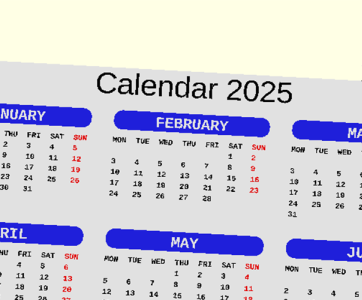
I love creating configurable generic models using OpenSCAD, and this is the most complex one I've created to date—an easy-to-configure calendar using some clever algorithms to render correctly.

Lazy objects are a fantastic addition to the already impressive PHP 8.4 release. In this article, we'll explore how to use them.

If you're like me and feel uneasy whenever something is typed as 'any' in TypeScript, this article is for you! I'll show you a neat trick to help both the compiler and your IDE understand the exact type of data being passed to your ng-template.